
May 24, 2026
Online vs Traditional Banks: Which Should You Use?
By Renee Carter · Saving & Everyday Money
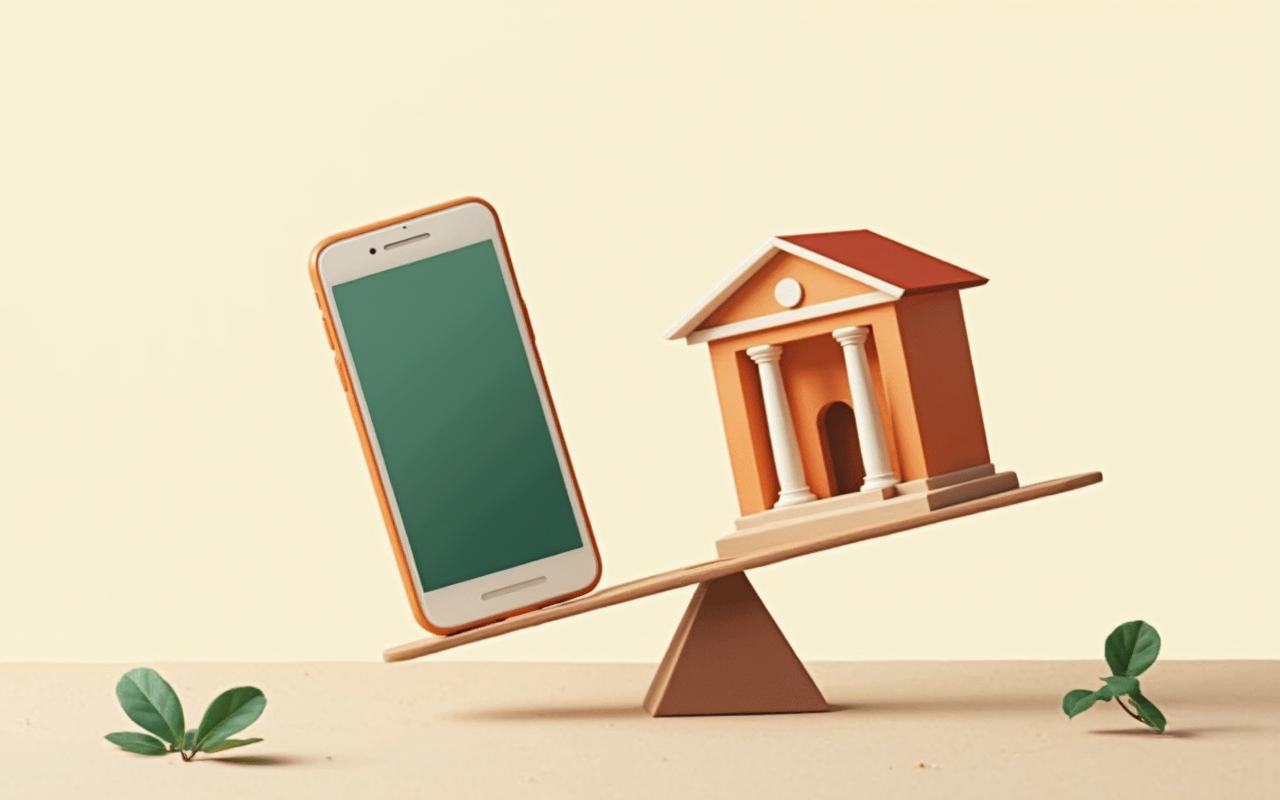
Not long ago, picking a bank mostly meant picking whichever one had a branch on your way home. That's not really how it works anymore. You can run your whole financial life from your phone now, never walk into a lobby, and still have your paycheck land on time and your bills paid without a hitch. So when people ask me whether they should go with an online bank or a traditional one, I get it. Both are good at real things. The trick is matching the strengths to the way you actually live, and that's what I want to walk through with you.
Online banks usually win on rates and fees, and the why is pretty straightforward. They aren't paying to keep the lights on in hundreds of branches or staff them, so a lot of that saved money comes back to you as higher interest on savings and fewer monthly charges. If your goal is to earn a little more on what you set aside and stop bleeding small fees, that can quietly add up over the course of a year. The catch is simple too: there's no counter to walk up to when you'd rather talk something out with a person.
Traditional banks earn their keep with that physical presence and a deeper bench of in-person services. Deposit cash regularly? Need a certified check, a safe deposit box, or just want to sit across from someone when the matter feels important? A branch network is genuinely worth something there. Established banks also tend to stack a lot under one roof, from mortgages to small business accounts, which plenty of people find handy. Just know that the convenience and the human touch can come paired with lower interest and more fees. It's a real tradeoff, not a free upgrade.
Getting at your money is another spot where the two play out differently day to day. Traditional banks give you branches and usually a big network of fee-free ATMs, which matters most when cash is a regular part of your routine. Online banks tend to answer this by teaming up with large ATM networks or refunding some ATM fees, though dropping off physical cash gets clunkier without a branch close by. Be honest with yourself about how often you handle cash. That one habit tips the scale more than anything else.
Customer service deserves a real look, because the kind of help you like changes everything when something goes sideways. Online banks usually offer support by phone, chat, or app, and a lot of folks find that quick and easy. Other people sleep better knowing they can walk into a branch and look someone in the eye, especially when they're untangling a stressful mess. Neither one is flat-out better. It comes down to how you prefer to solve problems and how much that face-to-face reassurance is worth to you.
Here's the part people tend to miss: you don't have to pick just one. A pretty common move, and one I like, is to use both. Keep a traditional checking account for cash deposits and the in-person stuff, and let your savings sit in a higher-paying online account. You get the everyday access of a branch and the better rates of an online bank at the same time, which is a fair chunk of the best of both. Since most accounts link up electronically, sliding money between them is usually fast and easy once it's set up.
In the end, the right call rests on your habits and what you care about, not on some one-size rule. Start with three questions: How often do you really need cash? How much do you value talking to someone in person? And how much would the extra interest or fee savings actually mean to you? Your answers will point you toward one model or a blend of both. And honestly, whatever you land on, just thinking it through like this is the win. It puts you in charge of your money instead of leaving it to habit.
See the options you may qualify for.
Answer a few quick questions and compare offers and programs matched to your situation. It is free to check.
See My OptionsGet the money guide that fits your situation
Practical, jargon-free tips on debt, credit, saving, and the programs you may qualify for. No spam — unsubscribe anytime.